FLYING AROUND THE FARLEIGHS WITH ROY MORRIS
STOP FOR A CHAT IN THE FIELDS
Keep an eye on Farleigh field edges this autumn and you may spot a small bird perched upright on a fence post, bramble or clod of earth. It may bob its tail, flick its wings and give a sharp little tack-tack call. That’s a stonechat: a smart, alert visitor whose name sounds rather like a conversation starter.

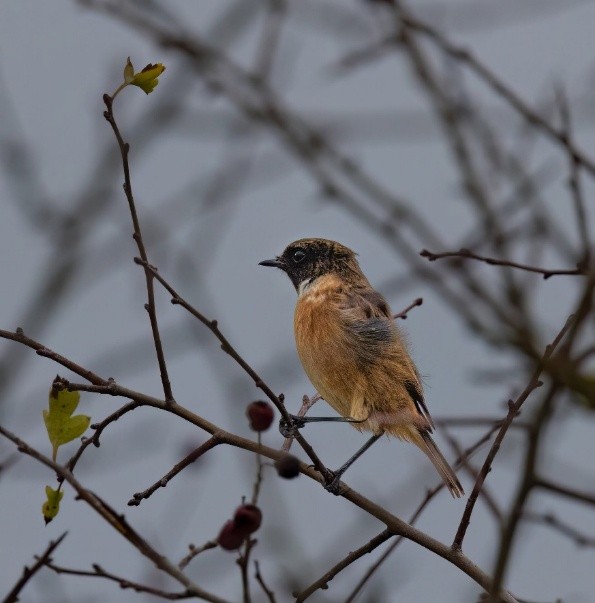
Stonechats are around all year in some parts of Britain, especially open heathland and rough country. But in autumn, birds move about, and some travel south or west for the winter. Others wander in search of food and shelter. That means one can turn up in an unexpected place — including a field along the Greensand Ridge or along the river. It may stay for a while or simply pause on its travels.
The male is handsome in his dark head, bright white collar and warm orange-red breast. Females and young birds are more softly coloured, with streakier brown plumage, but they share that upright stance and restless way of perching. Look for one on a prominent lookout, scanning the grass for insects and other small prey. Stonechats often return to the same perch, so if you lose sight of one, wait a moment and have another look.
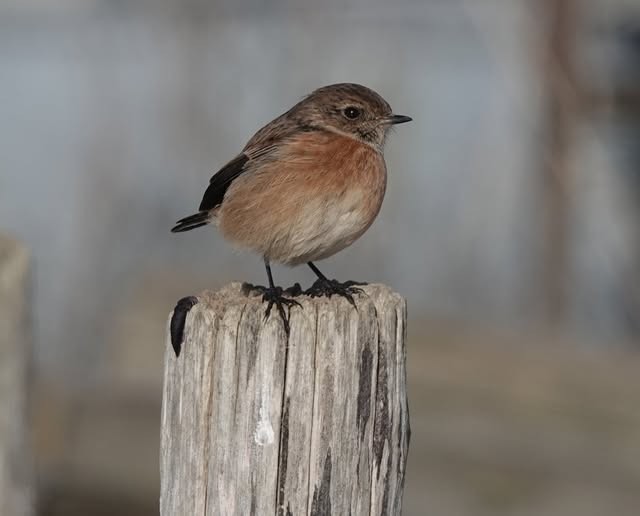
Their name is thought to echo their call: a crisp, clicking tack that can sound like two stones knocked together. It’s not much of a chat by our standards, but it carries well across a quiet field. The bird may also give a thin, high-pitched whistle. Once you recognise the sound and the habit of perching out in the open, you’ll be better placed to notice one.
Autumn walks are a good time to watch for them. Check fence lines, hedgerows, scrubby corners and rough patches beside fields. A stonechat’s small size can make it easy to overlook, but its habit of sitting in full view is a gift to anyone looking. Binoculars help, though a patient pause can be just as useful.
And if you do see one, enjoy the brief conversation. It may be a local bird, or a traveller passing through; either way, it brings a little movement and colour to the changing countryside. Fields are full of seasonal stories if we give them time to speak. This one may only offer a tack-tack before flying on — but that’s quite enough to make a walk feel richer.