FLYING AROUND THE FARLEIGHS WITH RAY MORRIS
Regenerative farming and wildlife
After the March lifeline, the editors received a query about the field below the cricket green with the footpath crossing down to the bridge. What is it planted with, and why as it doesn’t appear to have been cultivated and planted with a food crop. Fair question.
It is an example of the extensive, balanced conservation farming emerging across the country. Much is rightly made of the need for food production, but this can only be done in a healthy, biodiverse environment, not by applying yet more tonnes of artificial fertilisers and pesticides. Arable land hereabouts often requires significant chemical input even for a modest food crop, resulting in CO2 emissions from their manufacture and chemical pollution from run-off into local waterways.

There are plants in this mixture that actually fix nitrogen in the soil, improving its natural fertility. Many are deep rooted, which is why they often look good even in a dry summer. These mine water and nutrients and, because of their deep and extensive root system, allow rain to permeate, increasing drought resistance and reducing run-off. The crop supplies the seed vital to support farmland birds through the winter when natural food is scarce. On a cold morning, Yellowhammers, Linnets, Reed Buntings and Greenfinches may be feeding in mixed flocks with sparrows and tits, often many hundred strong.
In the summer, the long, tangled vegetation at the base of the hedges make them ideal for birds, mice and voles to nest in. Skylarks and tiny Chiffchaffs nest on or close to the ground. Harvest mice build their nests of dry grass around the fields too. Please tread carefully and keep to the path. A bird frightened from its nest by walkers, or a dog may be spotted by predators that will then plunder its nest.
Some of the plants sown will still produce seed in a second winter. The field won’t look so attractive to us then – but it will to the birds!
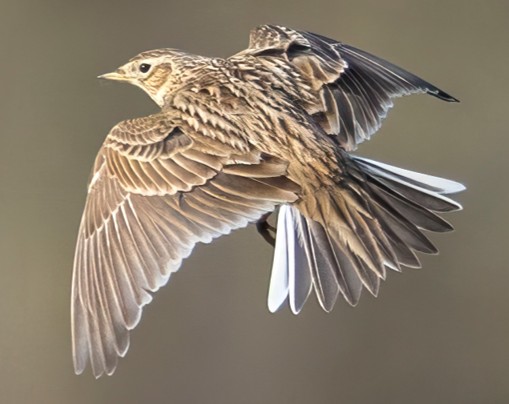
A local Skylark. Photo: Darren Nicholls
The benefits for wildlife are obvious. Equally importantly, from the wide range of wildlife-friendly farming being adopted locally, the increase in pollinating insects and those that predate agricultural pests improves the yields in fields where food is grown for human consumption.
The importance of this kind of regenerative agriculture, i.e. allowing nature’s natural processes to keep the soil healthy, is being thrown into sharp focus by the attacks on Iran, currently leading to a shortage of oil. Industrial agriculture depends on massive amounts of artificial fertilisers derived from oil to keep replenishing soil fertility. So that field is not only helping wildlife but also doing a bit to reduce our reliance of fossil fuels.