FLYING AROUND THE FARLEIGHS WITH ROY MORRIS
It's That Time of Year Again
“Where are they? My garden’s normally full of birds, but now there are hardly any!” So goes the most asked question of birdwatchers at this time of year. And with good reason. At the very time when the country’s bird population is probably at its greatest with all this year’s youngsters swelling the total, not only have the birds gone quiet, but they’ve also deserted our garden feeders too.

There’s a perfectly simple explanation. To begin with, Nature is providing a veritable smorgasbord of food: insects, seeds, berries and fruits of all kinds fill the hedgerows so suddenly the sunflower hearts and fat balls may seem less appealing to our regular garden visitors, and the smaller, or less dominant, birds don’t have to queue for their turn when there is so much available in the nearby bushes.
And a nearby bush, especially if it’s a thorny bramble, sloe or hawthorn, is a good place to be for many birds as most are now moulting. Not only does the cover afford food within easy reach, but it also means safety from predators at a time when birds’ flying is impaired because they don’t have a full set of flight feathers. They can still fly, but not so well as each wing could have three or four feathers either missing or not fully grown. Their body feathers are all being systematically replaced too, and this all adds to the energy requirement for new feather growth, so sitting quietly frees up the calories for it.
It has to be said that they don’t look their best either - a bit tatty, if we’re honest. Young starlings still have a mixture of brown juvenile feathers sticking out of their iridescent adult plumage; normally smart robins can look as though they’ve been in a stand-off with another robin that ended in fisticuffs; and a bald-headed blackbird that may have finally finished raising its second or even third brood appearing to gone ten rounds with ‘our ‘Enery’ (remember him?).
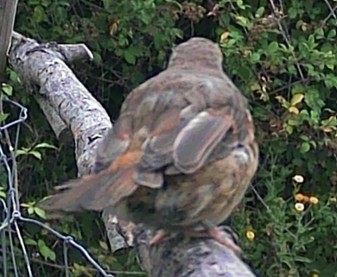
A moulting...in a matter of weeks though, their smart new plumage will be ready for the rigours of migration for those that do it, or for surviving an English winter (whatever that may turn out to be like) for those that don’t.
The robin, furthermore, unique among our garden visitors, will then be singing its mournful autumn song in preparation for establishing its winter territory. Autumn will be well underway.