FLYING AROUND THE FARLEIGHS WITH RAY MORRIS
Oilseed Rape and Birds – the Inside Story (literally)
Dazzling yellow fields of oilseed rape (OSR) have almost come to dominate the countryside in arable areas, including Kent, with the advent of modern agricultural practice. Selectively bred seed combined with chemical pesticides have made it a very productive crop, adept at spreading onto marginal land like roadside verges. Inevitably, such a dominant crop comes to influence the natural flora and fauna of the area, often negatively. Farmland bird populations have suffered enormously with these agricultural advances, but OSR has been shown to benefit a number of bird species.

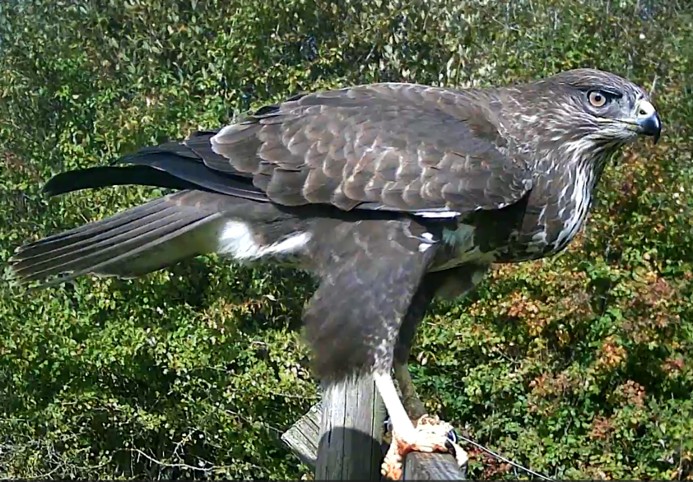
Buzzards benefit from the increased habitat the crop provides for voles – an important prey item in their diet. Reed Buntings too seem to benefit from OSR as a breeding habitat (whereas they are normally confined to damp ditches and reeds) as evidenced by them being one of a very few species to nest in it, although their breeding population is still declining (down by 54% in the last thirty years).
Young buzzard Linnet
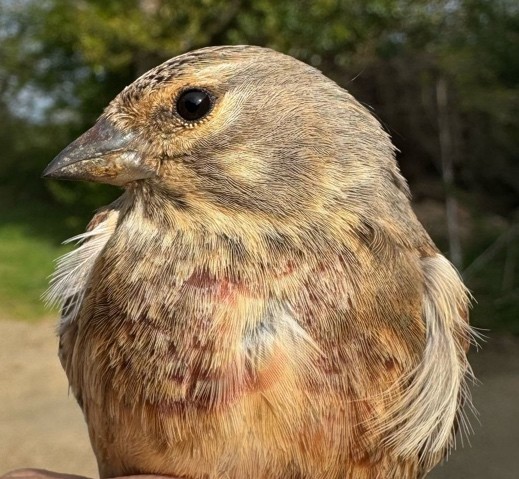
A male linnet in Spring with its red breeding plumage
beginning to show through on its breast.
(Alex Boughton)
Linnets, however, are one of the few birds that feed their young on seeds – virtually all others require insects for most of the nestling period - and have benefited from the woodpigeons’ impact on the crop. Studies have shown that in the ‘sixties, before the widespread introduction of OSR, agricultural ‘weed’ seeds dominated linnet chicks’ diet, but this has changed to OSR seeds now it has become a dominant crop and ‘weeds’ have diminished through herbicide use.
So, as linnets have been noticeably more abundant around here of late, let’s hear it for Oilseed Rape and woodpigeons … but farmers are excused from cheering the latter!